
Kweku Akese: What I Went Through Was for a Purpose
Every summer, Benetech is honored to welcome a student from Princeton’s PICS internship program. This year, that student was Kweku Akese, who spent the summer working alongside our marketing and communications team. Kweku reflects on the summer: what brought him to Benetech, what surprised him, and what he’s carrying forward.
There’s a form of silence that surrounds the diseases and disabilities we don’t talk about enough, particularly the ones that live in families, classrooms, and the outskirts of conversations that never quite make it to the core. I’ve spent most of my life learning to speak into that silence. Having the opportunity to intern at Benetech seemed like a good extension of this task.
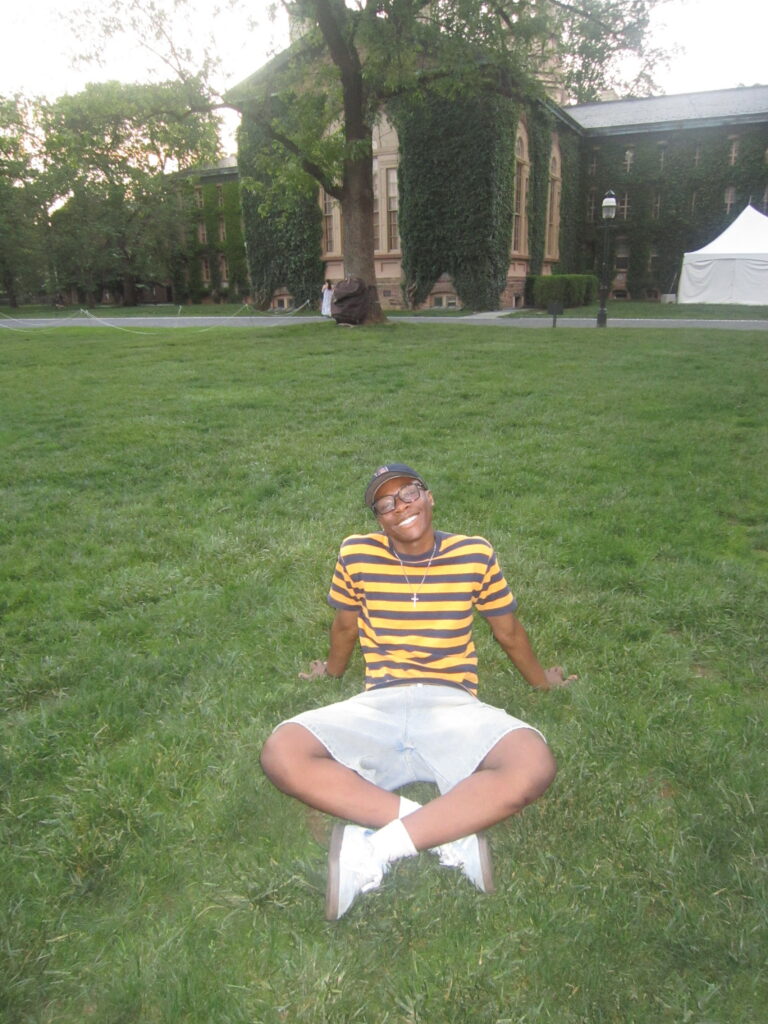
I was drawn to Benetech for one reason in particular. In high school, I became dissatisfied with the lack of education and conversation surrounding certain diseases that affected people near and dear to my heart, sickle cell anemia among them. Sickle cell disease is a genetic condition that affects red blood cells, causing severe, unpredictable pain and chronic fatigue, and it can lead to organ failure when it goes untreated — an invisible disability, since there’s often no outward sign of what someone is carrying. So I wrote a children’s book, Amira’s Amazing Day, to educate the younger generation about the disease, hoping that introducing it at such a formative age would spark greater awareness down the road. I believe Benetech shares the same motive for storytelling and advocacy, and I wanted to be part of an initiative that raises awareness for people who are frequently underrepresented in advocacy while remaining faithful to their emotions, mindsets, and beliefs. That was, is, and will remain super important to me. It’s also an indication of why early navigation matters for future navigation: if I hadn’t struggled the way I did in elementary, middle, and high school, and sometimes in higher education, I wouldn’t have the tools to help learners navigate similar positions now. Students with disabilities are enrolled in a learning system that wasn’t built for them, and being part of a group actively working to reconfigure that system sends me back to my own childhood. It reminds me that what I went through was for a purpose. And surely this is one of them.
What’s surprised me most, though, hasn’t been the mission. It’s been the people carrying it out. Funnily enough, I didn’t think online meetings with the full group would be as down to earth as they were. The first time we all connected on Zoom with the entire company, there was a sense of calm and a receptiveness to everyone getting to know me that is often lost in many corporate spaces. I immediately felt like I could participate, make jokes, and be comfortable around a group of people I hadn’t even met in person. It’s a small thing, maybe, but it says something about the kind of culture you build when the work itself is about meeting people where they are.
There was another shift I didn’t expect: how much I’d change my everyday way of thinking to include viewpoints I’d never had to consider before, not because I didn’t want to, but because I never really needed to. Making graphics was second nature to me. As a self-proclaimed COVID painter, I saw life in the blank canvas. But by creating graphics for the social media page, I learned that accessibility in the posts is especially important, given the people we’re speaking to. Now I think about everything in terms of accessibility — are these colors the right shade for someone with low vision, is there alt text on the post so a screen reader can describe the image aloud to someone who is blind, is the font big enough to read easily? Knowing that some of Benetech’s own employees are part of the communities Benetech serves was incredibly eye-opening to me. How beautiful is it that, within the company, we get to learn from the very people who benefit from the products we help produce.
That said, feeling at home on the team doesn’t mean I think the field is where it needs to be. There needs to be greater urgency in improving the technologies used in education today for the students who need them most. Every child has a right to education, and school systems, built on the promise of that right, are responsible for ensuring every child within their walls has full access to the resources they need to succeed. There has to be more intention and follow-through in seeking out tools like Bookshare to lighten that burden for learners.
I didn’t come to this work by accident, and I know I won’t leave it unchanged. Every hard year I spent trying to make a system see me is a year I now spend trying to make that same system see someone else. If that’s the trade, I’ll take it every time.